


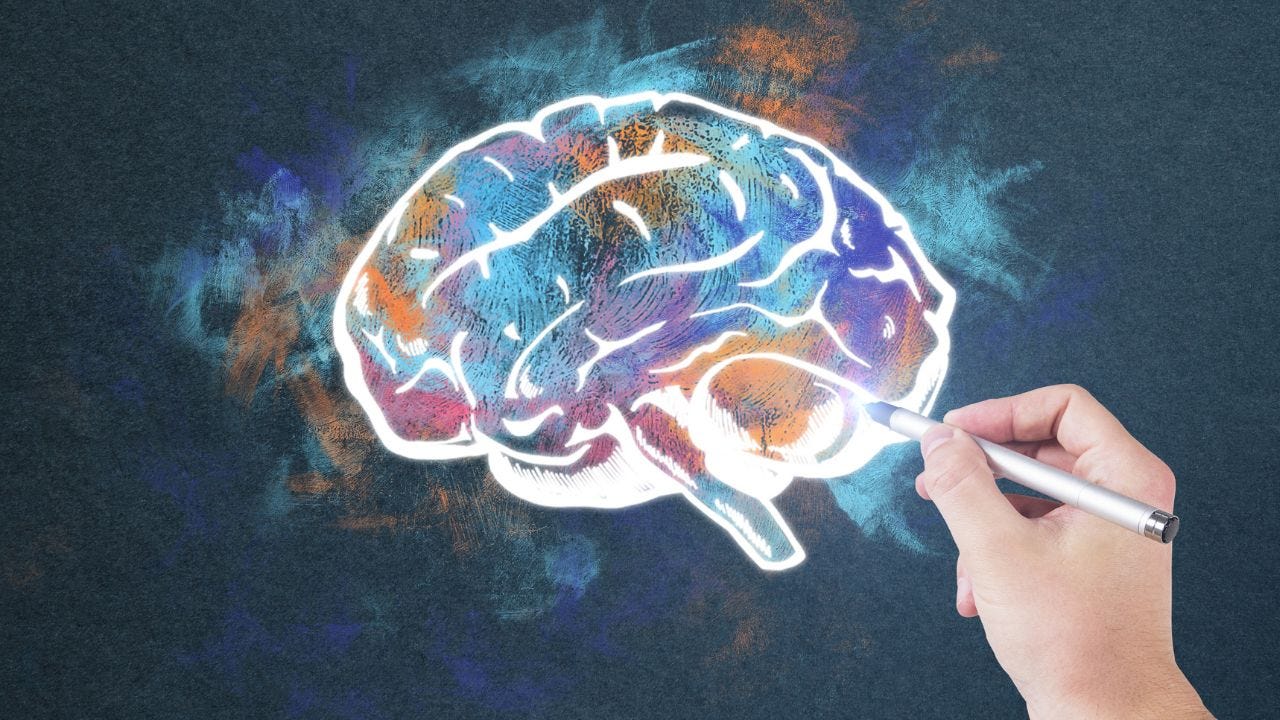
Greetings, Flockers!
Did you know about noetic science? I didn’t until recently, so I though I’d share.
We are living at a time where the boundaries of science are continuously expanding into realms that were once considered esoteric. ‘Noetic’ science now bridges the gap between the empirical and the experiential, delving into the study of consciousness and its influence on the physical world. But what is it exactly?
What is Noetic Science?
Noetic science is an interdisciplinary field that studies the nature of consciousness and its relationship with the material world. At its core, it seeks to understand how beliefs, thoughts and intentions can affect the physical, more traditionally scientific world. The term ‘noetic’ comes from the Greek word ‘noēsis/noētikos,’ meaning inner wisdom, direct knowing or subjective understanding.
Origins and Development
The term ‘noetic sciences’ was first coined in 1973 by astronaut Dr. Edgar Mitchell, the sixth man to walk on the moon. During his return from the Apollo 14 mission, Mitchell experienced a profound sense of universal connectedness, often described as a ‘Samadhi’ experience in Eastern traditions. This epiphany led him to found the Institute of Noetic Sciences (IONS) in 1973, aiming to integrate scientific methodology with inner knowing. Mitchell’s experience epitomises the essence of noetic science, which is a blend of subjective inner experience with objective analysis. He once said this:
“The way I like to phrase it is that the molecules of my body, the spacecraft’s body, and the molecules of the cosmos were all created in some ancient generation of stars. And that’s not just philosophy, that’s science.”
Key Principles of Noetic Science
Noetic science operates on a few key principles:
The belief that consciousness is part of the fabric of the universe, not just a product of the brain.
The idea that our minds can influence the physical world in ways not fully explained by conventional physics.
A commitment to exploring how individual and collective consciousness can lead to societal, environmental, and global health.
Noetic science often finds itself at the intersection of support and scepticism. While it has garnered interest for its novel approach to understanding consciousness, critics argue that its theories can drift into the realm of pseudoscience due to a lack of empirical evidence. I guess the question is: does everything have to be scientifically proven? How can you show physical evidence of love, for example?
While it may challenge conventional scientific paradigms, its pursuit of understanding the interconnection between mind and matter opens up new frontiers in our quest for knowledge. Whether through reading, research, or personal exploration, the journey into noetic science promises to be as enriching as it is enlightening.
“We are not only in the universe but the universe is in us. I hadn’t had that experience before. It was an epiphany.” -Dr. Edgar Mitchell
Further reading:
The Institute of Noetic Sciences (IONS) website is a treasure trove of information, offering articles, research papers, and details of ongoing studies.
Books such as “The Conscious Universe” and “Entangled Minds” by Dean Radin, a prominent researcher in the field, provide an in-depth look at the science behind psychic phenomena, a topic closely related to noetic science.
Additionally, the works of Dr. Edgar Mitchell, including “The Way of the Explorer,” offer profound insights into the genesis and philosophies underlying noetic science.